

McLaren has turned to its past for inspiration with the latest concept from the marque. Unveiled at 2026 Monterey Car Week, the McLaren McL 6GT is a preview of an ultra-exclusive supercar set for production in 2028, and it comes with an F1-like spirit and a manual transmission.

In many ways the McL 6GT is a contemporary version of the McLaren M6GT, the road car Bruce McLaren had in mind before he died in 1970. The original M6GT never made it to the showroom, but it was the philosophical bedrock for what would follow. Now, more than half a century on, McLaren is building on that notion to put forward a new supercar that is all about the driver.
The headline feature is the manual gearbox. It is the first time a McLaren has been fitted with an authentic manual since the McLaren F1 back in 1992. At a time when dual-clutch systems are the norm for speed, the company is clearly positioning the McL 6GT for those who prefer mechanical involvement to lap-time figures.
[imagely id=”1598″]McLaren is careful to note that this is no carbon copy of the old M6GT. Rather, it is a reimagining of Bruce’s vision, marrying the design sensibilities of the 1960s with today’s carbon-fiber and performance engineering.
“With six more decades of passion and innovation behind us, the McLaren McL 6GT imagines what our founder would have wanted to finish,” says Nick Collins, CEO of McLaren Automotive. “It is a modern icon of driver connection and stands for the bold and provocative future we are putting in place.”
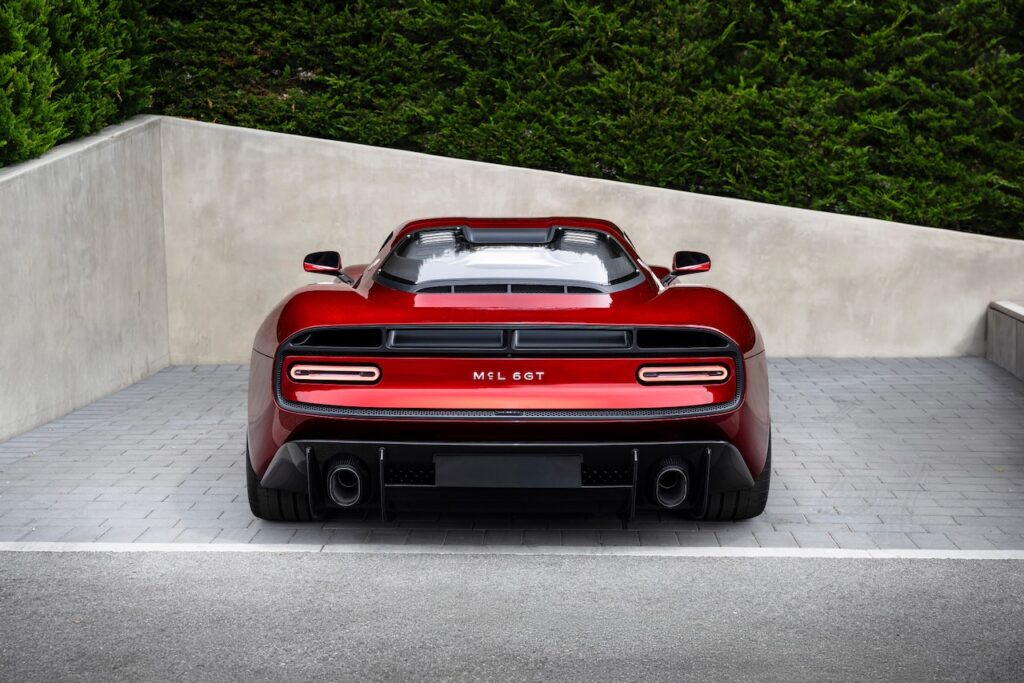
This follows on from the work of McLaren Special Operations, which put a one-off recreation of the M6GT on display at Goodwood. The McL 6GT takes that sort of homage a step further by offering a glimpse of a car that will be available to buy.
Full details on the powertrain have not been revealed, but McLaren has put to rest any speculation: the McL 6GT is rear-wheel drive and powered by a V8. Along with the manual, it is a combination that sets it apart from the rest of the current lineup.
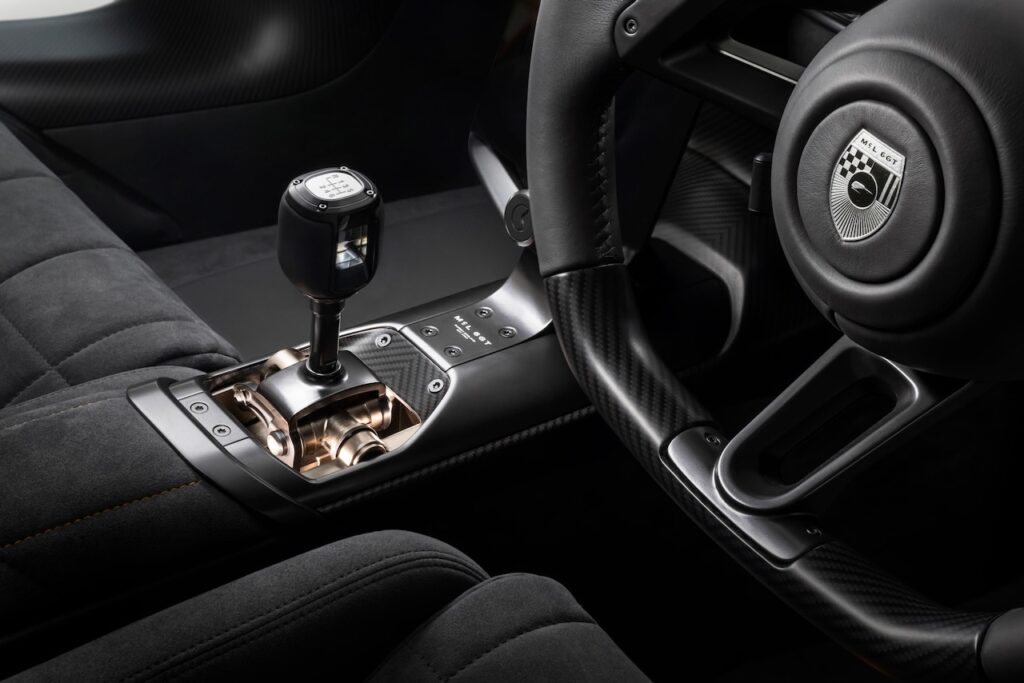
The aim is for a driving experience that is tactile and analogue. To that end, the car is equipped with hydraulic steering and switchgear designed to put a physical link between man and machine. Even the gear lever has been given some thought; aside from the feel of the throw, it bears a three-dimensional Speedy Kiwi as a reference to the brand’s early days.
As for construction, the McLaren McL 6GT concept is in keeping with the manufacturer’s traditional preoccupation with shedding weight. With a full carbon-fiber monocoque and bodywork, the McL 6GT is built to reinforce McLaren’s view that what you put in the tank is no more important than how light the car is.
While a curb weight has not been revealed, McLaren states the carbon-fiber structure is there to underpin the car’s pure, driver-centric nature and ensure a formidable power-to-weight ratio. You will find exposed gloss carbon fiber in the cabin as well, a visual nod to the brand’s racing past and the original M6GT.
The McL 6GT is a study in modern execution of 1960s sports prototype styling. It is particularly reminiscent of the McLaren M6A Can-Am machine that was the progenitor of the first M6GT. The concept is low and wide with a clean nose and surfacing, finished off with a Kammback rear. From the way the roofline makes one unbroken shape with the engine cover and rear deck, to the overall silhouette, it has the organic, low-drag air of an endurance racer. Even the cabin seems to be part of the body rather than perched on top of it, according to McLaren.
There are heritage touches all over the exterior. The “Racing Loop” in the airflow architecture is taken from the taillights of the original M6GT, and Bruce McLaren’s old license plate for that car is reworked into a tone-on-tone graphic. His signature can be found in the engine bay and the Speedy Kiwi is etched on the fuel cap.
McLaren has made sure the interior is not lost in digital distraction. The cockpit is about tactility and involvement, with knurled aluminum controls and engineering left on show. There are modern takes on period design, such as the updated boxed quilting seen on the original M6GT, and the digital gauges have been kept simple to preserve some of the emotion of the old car.

It is a conscious departure from the screen-laden interiors of most performance cars today; the McL 6GT is being put forward as something more mechanical and engaging for the buyer.
This is more than a design exercise. McLaren intends to put a production version on the road in 2028, a highly exclusive supercar that will exist apart from the brand’s usual offerings. No word yet on price or final specs for the road car, but with its manual gearbox, RWD setup and carbon build, the McL 6GT has the makings of one of the most enthusiast-friendly machines McLaren has put out in a long time.
As it stands, it is one of the highlights of Monterey Car Week, marrying the analog feel that is in short supply these days with the spirit of Bruce McLaren’s unfulfilled vision for a road car.