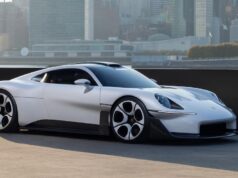
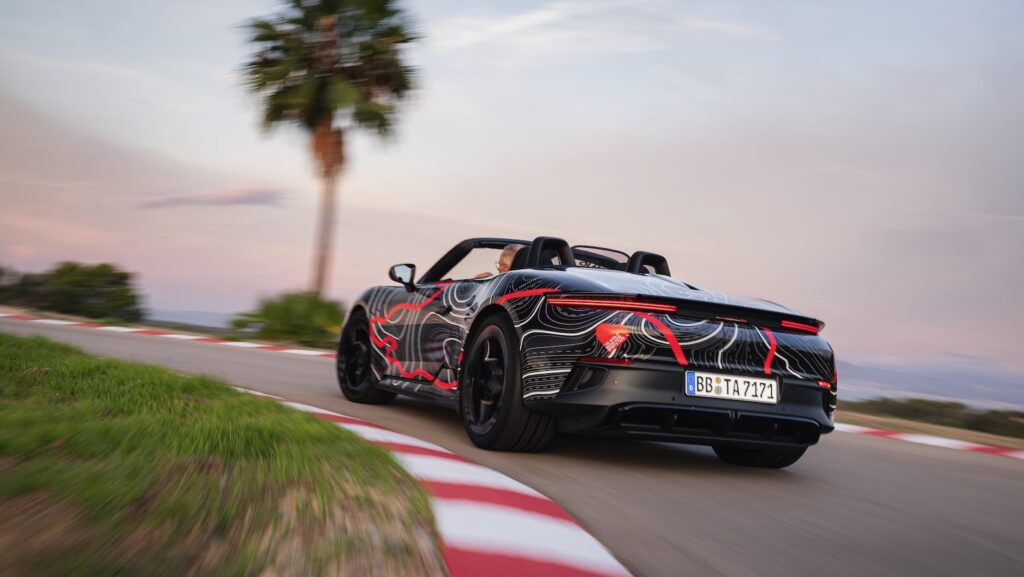
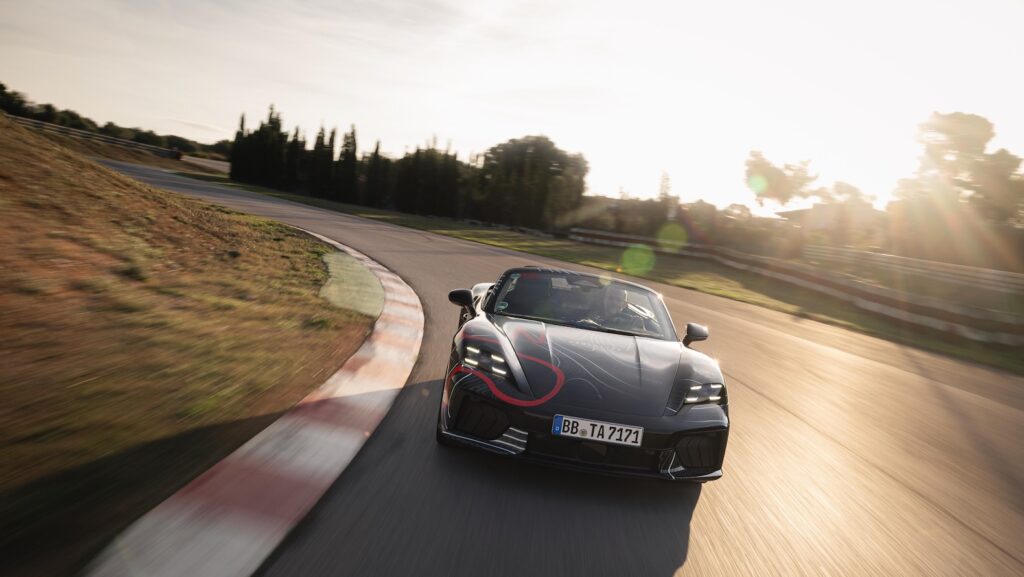
Porsche’s first electric Boxster is just about ready to go into production, borrowing chassis technology from the 911. It’ll feature rear-wheel drive, and an optional virtual seven-speed transmission that even simulates the sound of a flat-six engine.
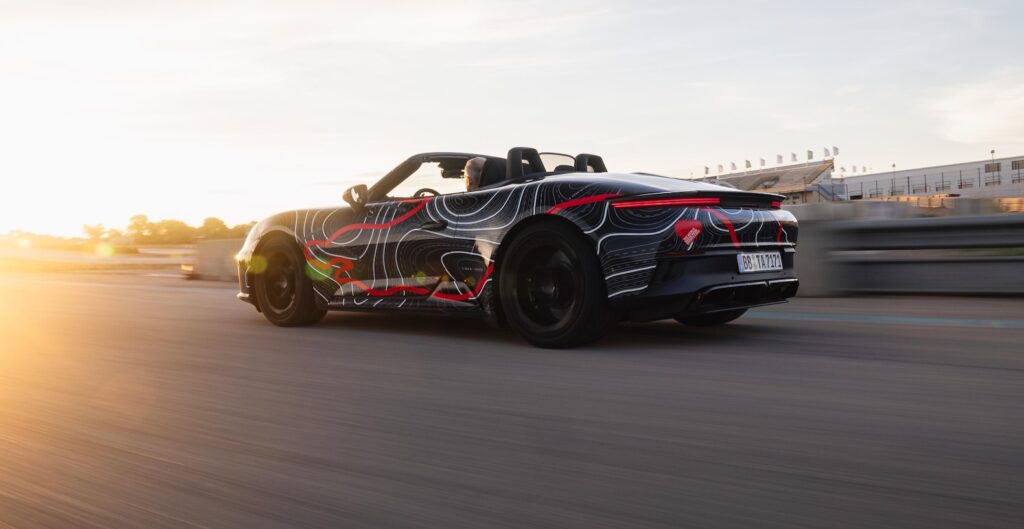
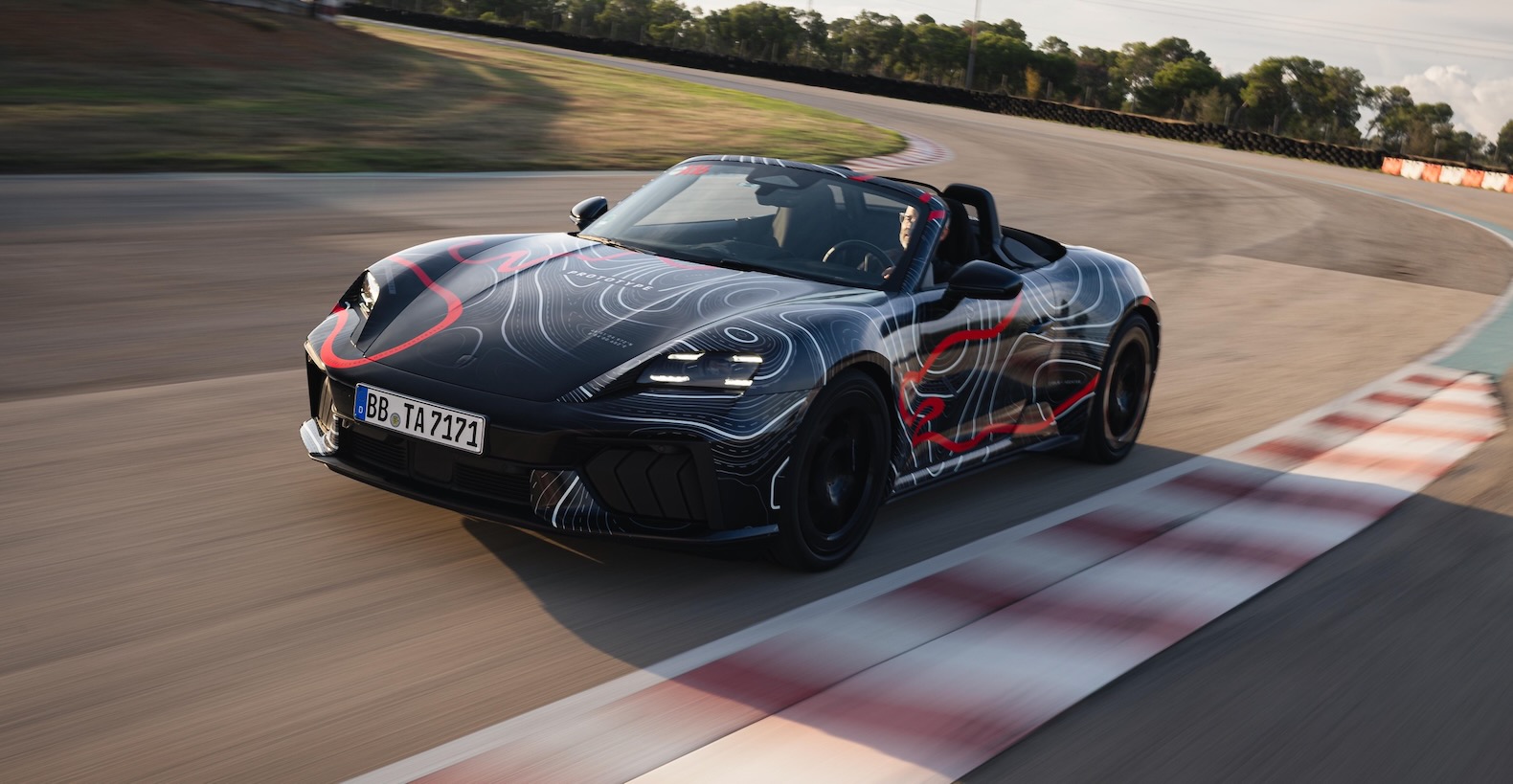
The 2028 Porsche 718 Boxster EV is getting closer to production, with Porsche revealing some more important information regarding its first fully electric two-seater sports car. After logging almost 2.5 million miles of testing, the electric Boxster will offer the same driving dynamics as its mid-engine predecessors, along with blistering acceleration, some pretty cool chassis tech, and one unusual feature to make driving an electric sports car feel more like piloting a traditional Porsche.
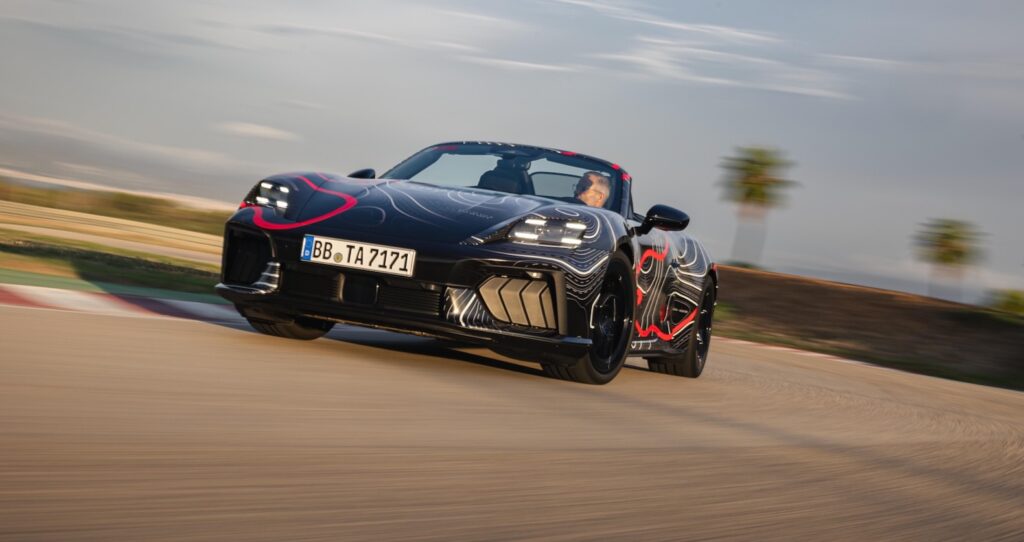
Porsche confirms the electric 718 Boxster will make its world debut in Q1 of 2027. The switch to an electric powertrain is a huge move for a sports car like the Boxster, and while Porsche says it’s gone to great lengths to ensure the new Boxster has an engaging driving experience, just like a true Porsche roadster.
A big challenge Porsche had to overcome with the electric Boxster was how to replace the mid-mounted engine and retain the balanced handling that the Boxster has been known for over the years. Porsche’s solution is a new “E-Core” architecture, where the 800-volt battery is located just behind the seats, in the same location as the Boxster’s gasoline engine.
The location of the battery is unusual in that most electric vehicles locate the battery pack underneath the passenger compartment. The placement of the battery pack in the Boxster is meant to distribute the weight more centrally, giving it a 40:60 front-to-rear weight distribution, similar to the weight distribution in a mid-engine sports car. Porsche also claims that having the battery behind the seats helps to retain the low seating position Boxsters are known for.
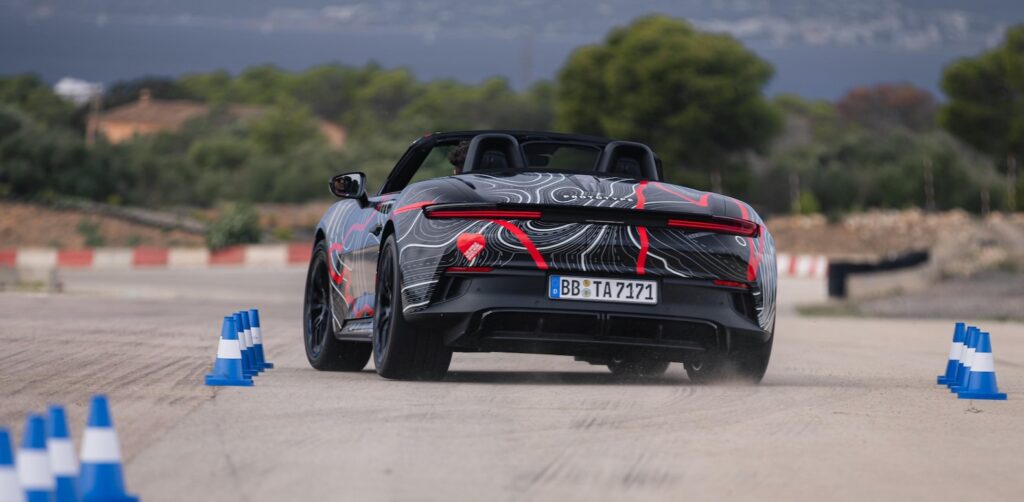
The new electric Boxster will weigh about the same as the current 911 Carrera GTS Cabriolet equipped with a T-Hybrid powertrain. That’s quite a bit heavier than past gasoline-powered Boxster models, but Porsche hopes that the new platform’s weight distribution and low center of gravity will help the Boxster retain the agility it’s known for.
Porsche is borrowing heavily from the 911 for the electric Boxster, because it wants to ensure the electric Boxster has the same handling chops as any other sports car it offers. The steering system in the new Boxster is borrowed from the 911 Carrera GTS, and both the braking system and wheel/tire configurations are from the 911.
For the first time ever, the Boxster will be offered with rear-axle steering, which will help with maneuverability at lower speeds, but also help stabilize the car at higher speeds while cornering. Porsche’s electronically controlled Porsche Torque Vectoring Plus limited slip differential, which is also borrowed from the 911, will also help manage power distribution to the rear wheels.
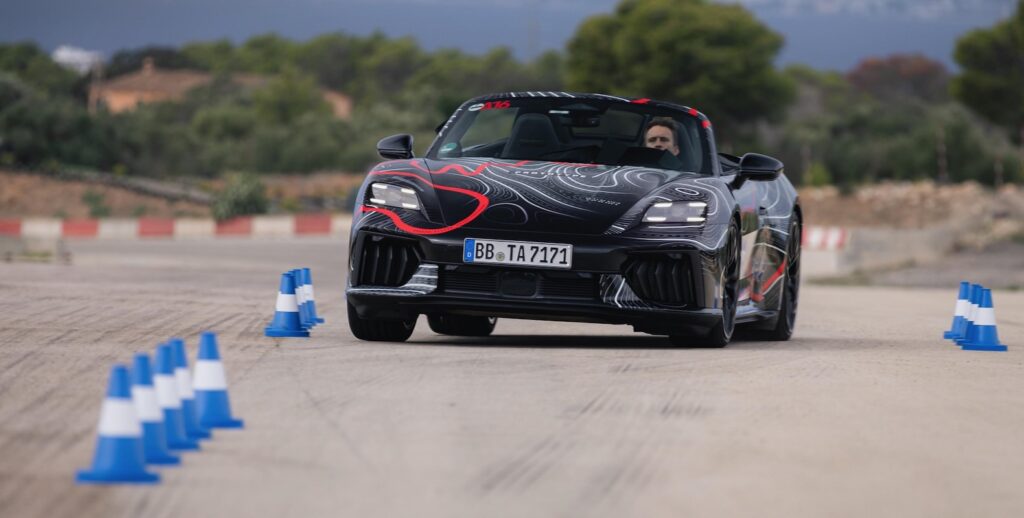
Speaking of rear wheels, all electric 718 Boxsters will be rear-wheel drive. Porsche says that it isn’t taking the same all-wheel-drive approach as many other high-performance electric vehicles, and instead is focusing on giving the Boxster its own traditional driving character.
Porsche says the most powerful version of the electric Boxster will do zero to 62 mph in under three seconds and have a top speed in excess of 155 mph. That would make the new electric Boxster the quickest and most powerful 718 to ever go into production, and while Porsche hasn’t officially given any power or torque figures yet, it’s sure to be pretty quick. Still, impressive acceleration figures are becoming commonplace in the EV world, and what makes the new Boxster so interesting is that Porsche is attempting to replicate some of the driver interaction that enthusiasts love about Porsche’s gasoline-powered sports cars.
Every 718 Boxster electric will come standard with Porsche’s new “E-Shift” system, which will simulate the behavior of the brand’s seven-speed PDK dual-clutch transmission. At the push of a button, the Boxster driver will have access to a virtual transmission that mimics the shift characteristics of a traditional Porsche automatic.
Depending on the driving mode, the electric Boxster can be set to automatic shifting or allow the driver to manually shift virtual gears via paddles mounted behind the steering wheel. Porsche has also programmed its electric powertrain to simulate changes in torque as the car shifts in order to give the driving experience a more mechanical feel without the need for an actual multi-speed transmission.
The most surprising aspect of the electric Boxster, however, is its sound. When the E-Shift feature is engaged, the Boxster will mimic the exhaust note of the 981-generation Boxster GTS’ six-cylinder boxer engine. For those who feared electrification would rob the Boxster of one of its most enticing features, E-Shift provides an interesting compromise.
While a simulated transmission and engine note isn’t a substitute for the actual mechanical feel of the naturally aspirated flat-six engine, Porsche seems to be more ambitious than simply adding artificial sounds to make the acceleration of an otherwise silent EV feel like a typical sports car. Instead, Porsche’s system seems to add a layer of interaction to the driving experience.
Thankfully, Porsche says the E-Shift feature won’t have any effect on the car’s performance. The car’s electric powertrain will provide the same level of acceleration regardless of whether E-Shift is on or not. With the feature disabled, the steering wheel-mounted paddles can be used to select three different levels of regenerative braking.
Porsche has also turned to legendary rally driver Walter Röhrl to help it evaluate the driving characteristics of its new Boxster. The two-time World Rally Champion has praised the electric roadster’s acceleration, braking, and handling, which suggests that Porsche is on the right track with its efforts to keep the Boxster’s character intact.
The electric Boxster was put through an extensive testing regime around the world before making it to this stage of development. The car was tested in around 2.5 million miles in over 20 countries, and engineers ran prototypes of the car in temperatures as low as minus 22 degrees Fahrenheit in Sweden and as high as 124 degrees Fahrenheit in California’s Death Valley.
The electric Boxster was also tested in everyday driving scenarios around urban centers like Los Angeles, Las Vegas, and Shanghai to evaluate its usability and driver assistance systems. The prototypes were tested at elevations as low as approximately 282 feet below sea level and as high as over 9,000 feet above sea level.
Porsche also tested the electric Boxster’s charging performance using five different charging standards, though the automaker has yet to release official figures for the car’s charging speeds, battery capacity, or driving range. These numbers will be particularly interesting considering the Boxster’s relatively small size and the difficulties in packaging a battery in a lightweight sports car.
The electric 718 Boxster will be built at Porsche’s main production facility in Stuttgart-Zuffenhausen, Germany, alongside the automaker’s other sports cars.
The 2028 Porsche 718 Boxster EV is set to make its world premiere sometime in the first quarter of 2027. We will have to wait until then to get the info about the pricing, final performance specs, EPA driving range, and U.S. availability.