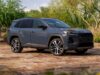
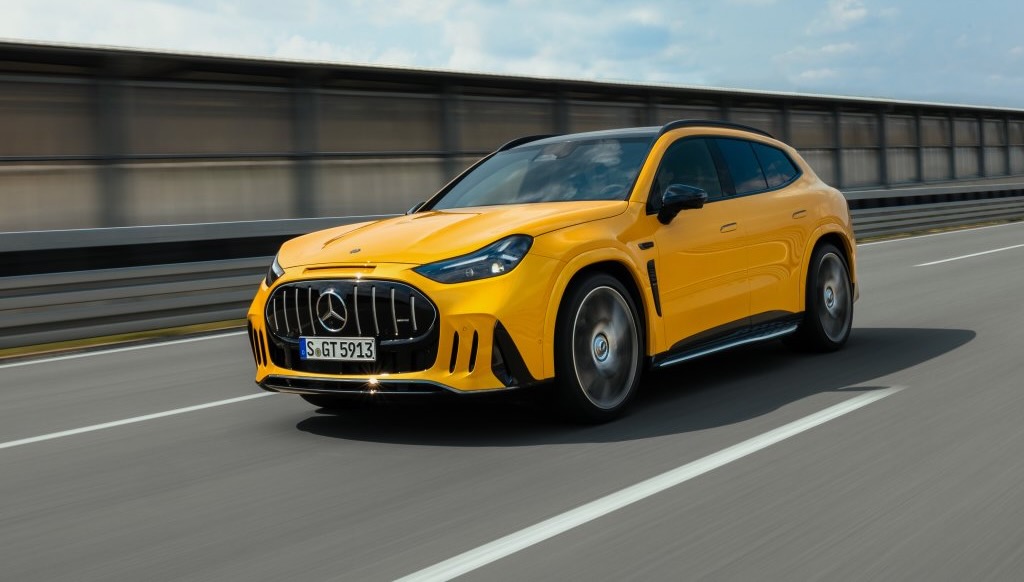
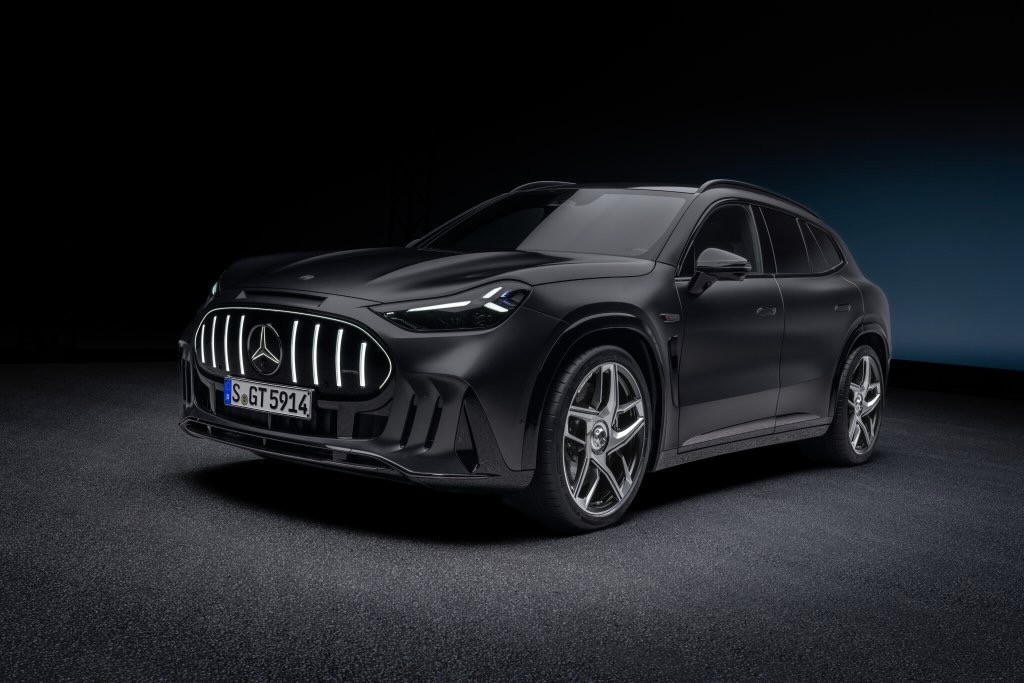
Mercedes-AMG is set to put its next-generation electric performance tech in a full-size SUV. The 2028 Mercedes-AMG GT SUV will make its U.S. debut in the summer of 2027, headlined by the range-topping GT 63 with a 0–60-mph time of 2.4 seconds and 1,153 horsepower on tap.
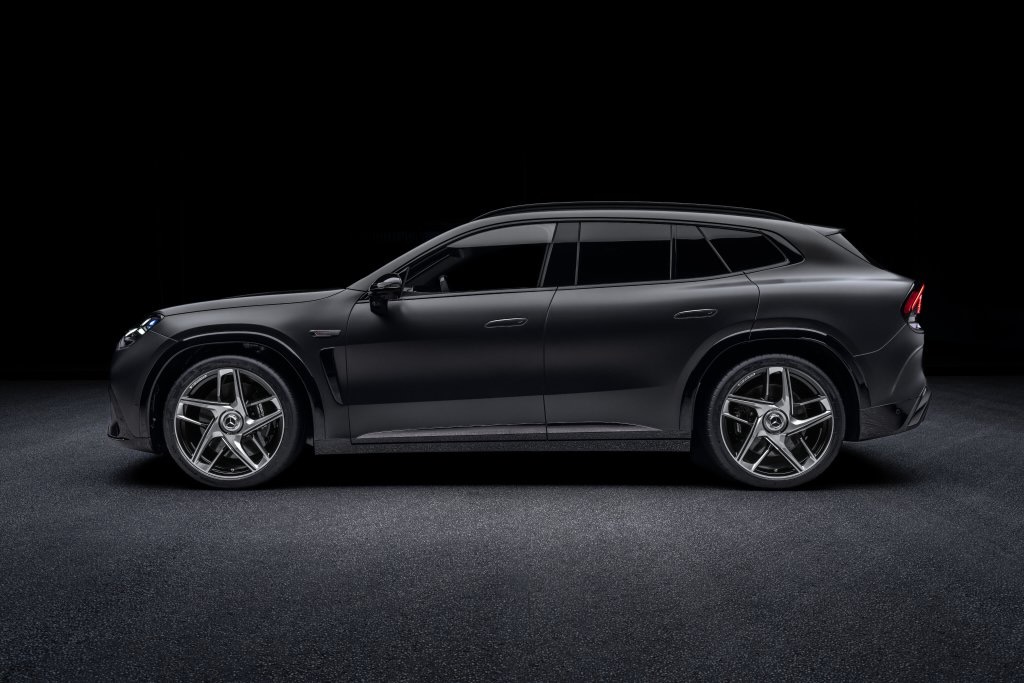
The GT SUV is the second model to be built on the firm’s AMG.EA high-performance electric architecture and the first full-size SUV to be developed in-house by Mercedes-AMG. The initial lineup at launch will comprise the GT 53, GT 55 and GT 63.
Three motors, 1,153 horsepower
The GT 63 and GT 55 are powered by three axial-flux electric motors apiece, one up front and two in back. According to Mercedes-AMG, the GT 63 puts out as much as 1,153 hp and 1,475 lb-ft of torque; the GT 55 is good for 805 hp and 1,372 lb-ft. Variable all-wheel drive is employed on both, the front motor can be disengaged under light loads for better efficiency.
Mercedes has the GT 63 reaching 60 mph in 2.4 seconds with a one-foot rollout (2.6 without) and an electronically capped top end of 168 mph. For the GT 63 and GT 55 the company also cites up to 711 hp of continuous output to underscore sustained power in addition to peak figures.
The entry-level GT 53 is another matter, with two permanently excited synchronous motors making a total of 536 hp and 590 lb-ft. It has a two-speed rear transmission and a 3.7-second 0–60 claim with rollout.
800-volt battery and up to 710-kW charging
An 800-volt system and a 128-kWh battery of directly cooled cylindrical cells are fitted to the GT 63 and GT 55. Under the right conditions, Mercedes says the battery will take DC fast-charges of up to 710 kW and put 454 km (282 miles) of WLTP range on board in 10 minutes. A 10-to-80-percent charge is put at 12 minutes.
The GT 53’s 106-kWh battery can be charged at 600 kW. Mercedes lists 440 km or 274 miles of added WLTP range in 10 minutes and 11 minutes to get from 10 to 80 percent. These are preliminary numbers that hinge on ambient temperature, the state of the battery and the station in question.
WLTP range is quoted at 620 to 700 km for the GT 63 and GT 55 and 597 to 668 km for the GT 53. Those are European test-cycle results, not EPA estimates.
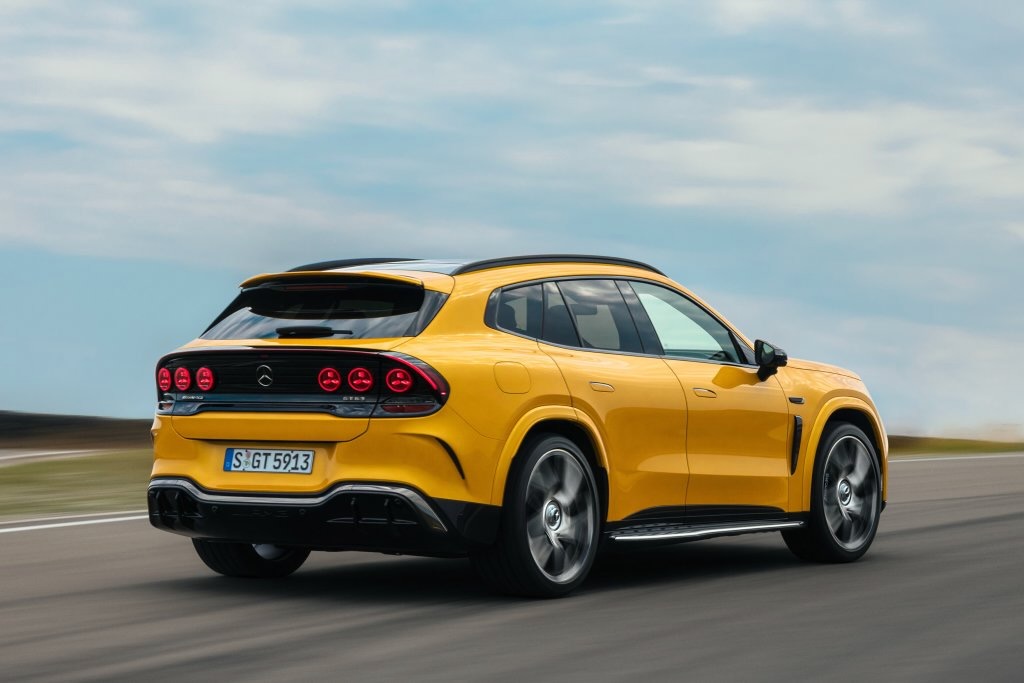
In place of conventional anti-roll bars, the new AMG ACTIVE RIDE CONTROL+ suspension relies on active pitch-and-roll stabilization and hydraulic dampers. Mercedes maintains it will keep body movement in check during hard braking and acceleration yet leave ride quality unimpaired on rough ground. It is standard on the GT 63 and an option for the GT 55.
All models have active rear-axle steering and AMG Performance 4MATIC+. At low speed the rear wheels turn against the front to sharpen the turn-in, then with them at higher speeds for stability. As for brakes, the GT 63 has carbon-ceramics as standard. The GT 55 comes with steel, though carbon ceramics are an option, and the GT 53 is equipped with steel.
To give the electric SUV more of a traditional performance car feel, AMG has introduced the AMGFORCE Sport+ mode. In the GT 63 and GT 55 it will conjure the noise of an AMG V8 and in the GT 53 a six-cylinder. Gear changes are simulated and the system can put some vibration in the seat and alter the instrument display.
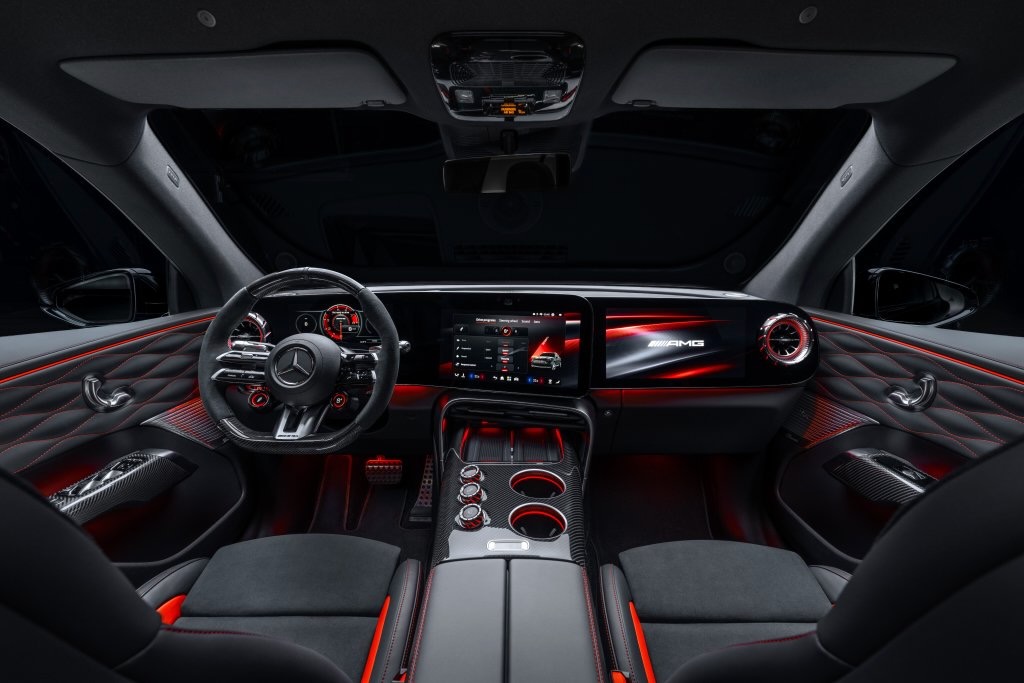
The cockpit is oriented to the driver with a 14-inch central screen and a 10.2-inch instrument panel, with an optional 14-inch display for the passenger ahead. The MBUX system is the latest from Mercedes and will have AI from ChatGPT, Microsoft and Google as well as apps for track and performance.
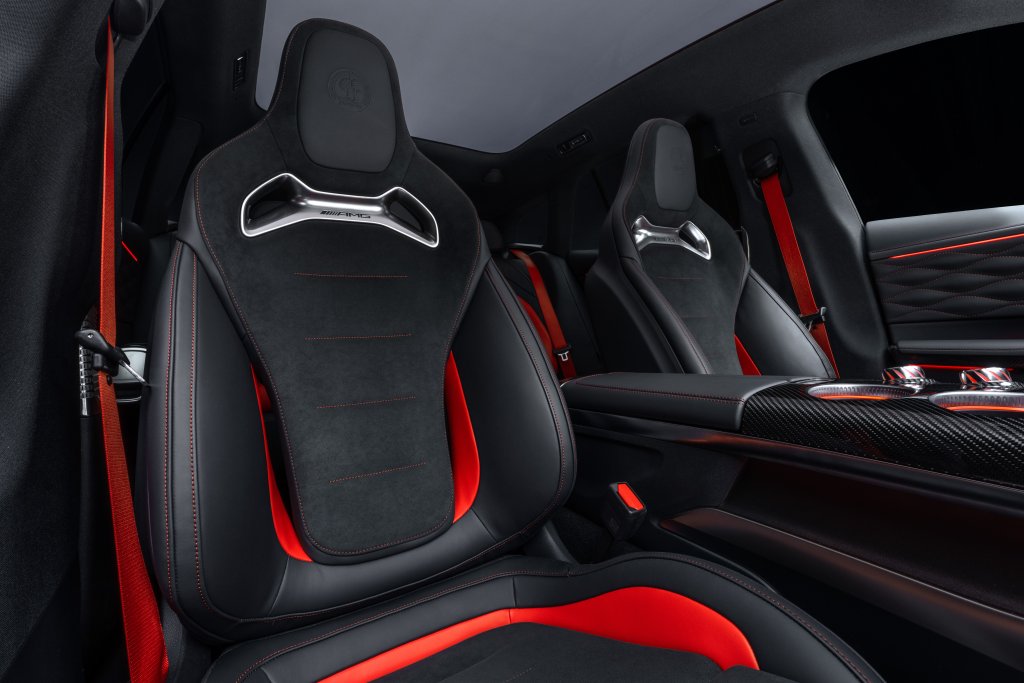
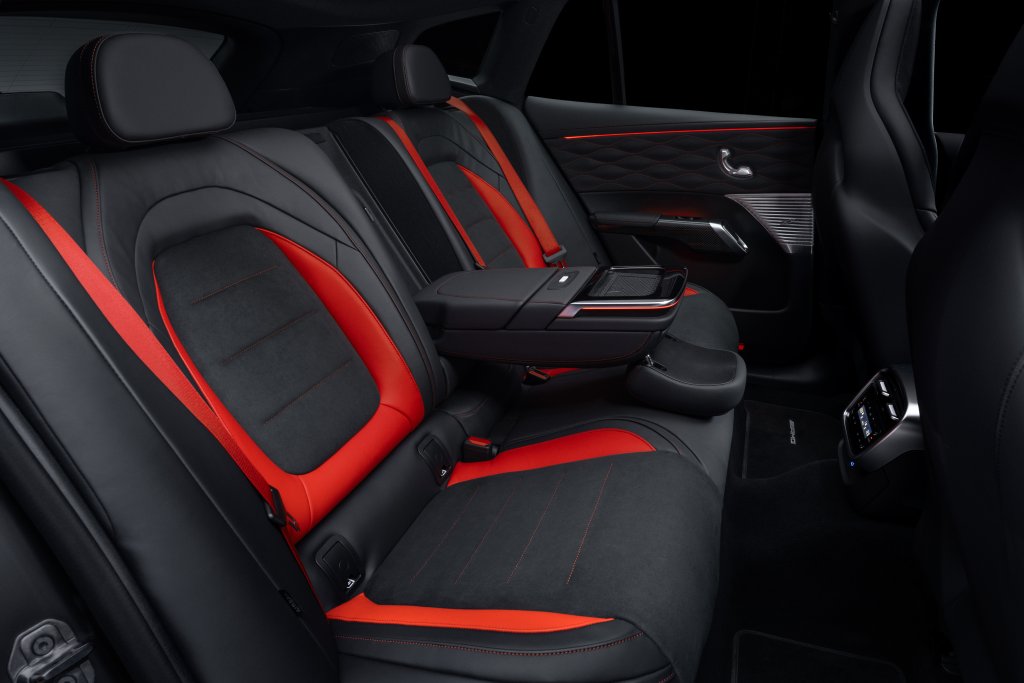
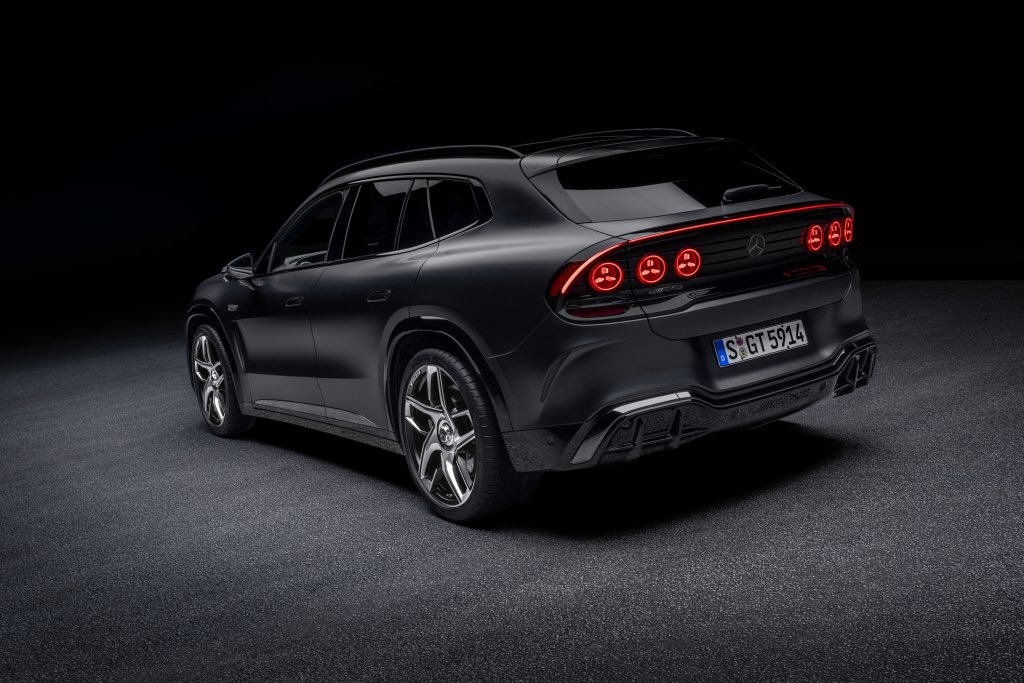
On the outside there are active aero bits like the adjustable rear spoiler on the GT 63 and GT 55 and front air louvers that open for cooling. Even with the roofline’s slope, the rear can still fit three and the trunk holds 21.4 cubic feet, with a 2.8-cubic-foot space up front.
Production of the 2028 GT SUV will be in Sindelfingen, Germany. Pricing has not been revealed, but it will arrive in the U.S. in the summer of 2027.