

It’s not every day Toyota drops two brand-new performance flagships, but that’s exactly what happened as Toyota Gazoo Racing pulled the covers off the GR GT and GR GT3 prototypes. And after years of rumors, hints, and camouflaged test mules circling Fuji and the Nürburgring, we finally have a proper look at Toyota’s next-generation halo machines.
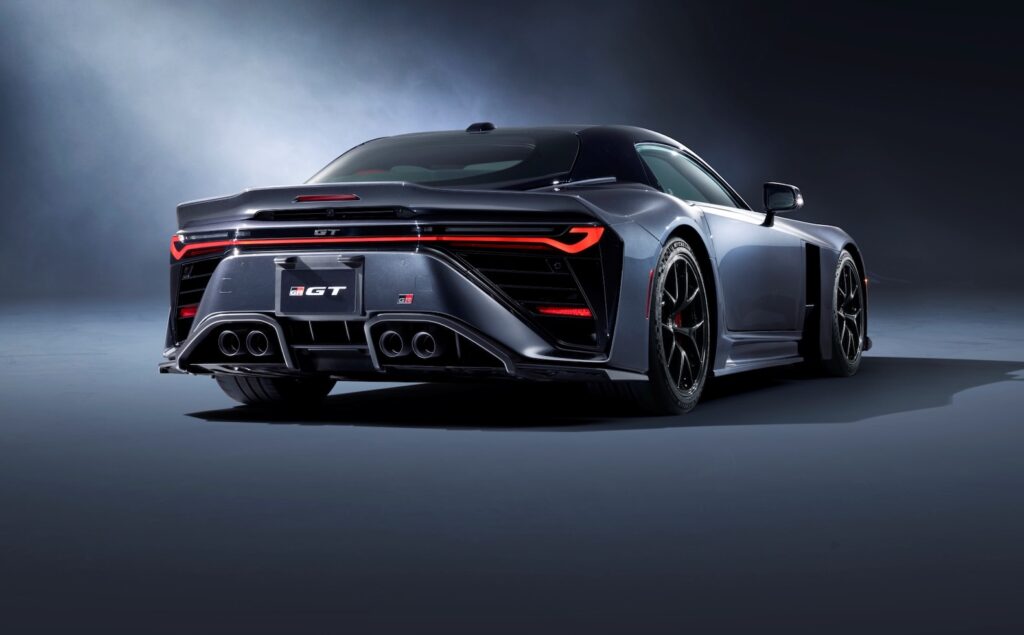
These two cars are a statement—one that says Toyota wants to be taken seriously as a global performance brand, not just the company that builds Camrys and hybrids.
The GR GT is the star of the show. In typical Toyota fashion, they’re calling it a “road-legal race car,” which sounds like marketing fluff until you look at what’s under the skin.
[ngg src=”galleries” ids=”1505″ display=”pro_horizontal_filmstrip”]Here’s what the GR GT brings to the table:
- A newly developed 4.0-liter twin-turbo V8
- Hybrid assist to sharpen throttle response
- 641+ horsepower and 627+ lb-ft
- Front-engine, rear transaxle layout
- 45:55 weight distribution
- Toyota’s first all-aluminum space frame
And the engineering choices reflect that ambition. The team didn’t just lower the engine—they lowered everything. Dry-sump lubrication, a battery placed deep in the chassis, an aggressively dropped seating position. Toyota wanted the center of gravity of the car to match the driver’s, and they achieved it.
Toyota says the GR GT was designed “aerodynamics first,” which is a polite way of admitting the design team didn’t get the final say for once. Aero engineers—many with World Endurance Championship experience—shaped the car, and designers were told to make it pretty after the fact.
And when Toyota claims a top speed of 199 mph+, aero suddenly matters a lot more.
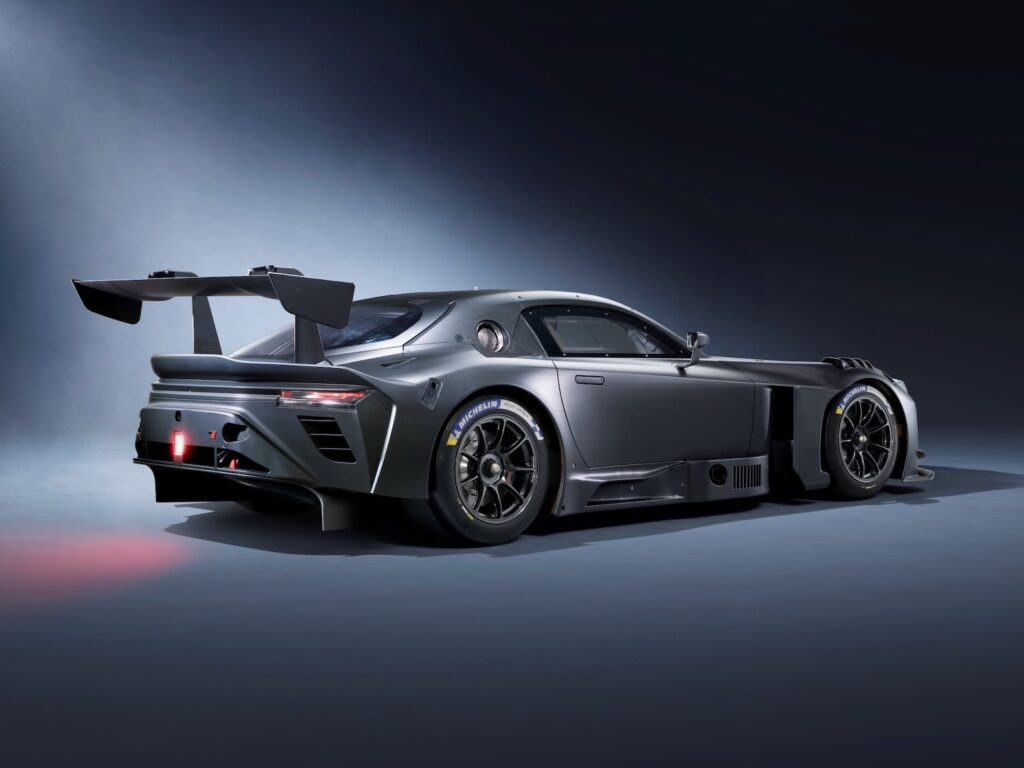
The second car, the GR GT3, is the full-race version of the GR GT, built to FIA GT3 specifications.
The GR GT3 shares:
- The V8 hybrid architecture
- Much of the aluminum chassis
- The aero-first design approach
Toyota plans to release these new supercars around 2027.